
EV chargers
Charge at home, on your own power
A Level 2 charger installed by licensed electricians, with the panel work most homes need first. Overnight on the grid, or by day on the roof.
Get a free quoteWhat you get
A 240 volt Level 2 charger on its own circuit, mounted where the car parks, with the permit pulled and the inspection passed. A full charge overnight for any EV sold in Canada. If your panel can’t take the circuit, we tell you before anything is bought, and the upgrade goes in the same quote.
The panel question
This is the whole job for most homes. A Level 2 charger wants 40 to 60 amps of its own. A 200 amp service usually has it. A 100 amp service that’s already running a furnace, a range and a dryer usually doesn’t, and the options are a 200 amp upgrade or a load-managed charger that slows down when the house is busy. We’re electricians, so we work this out on the site visit, not after the charger is on the wall.
Charging on solar
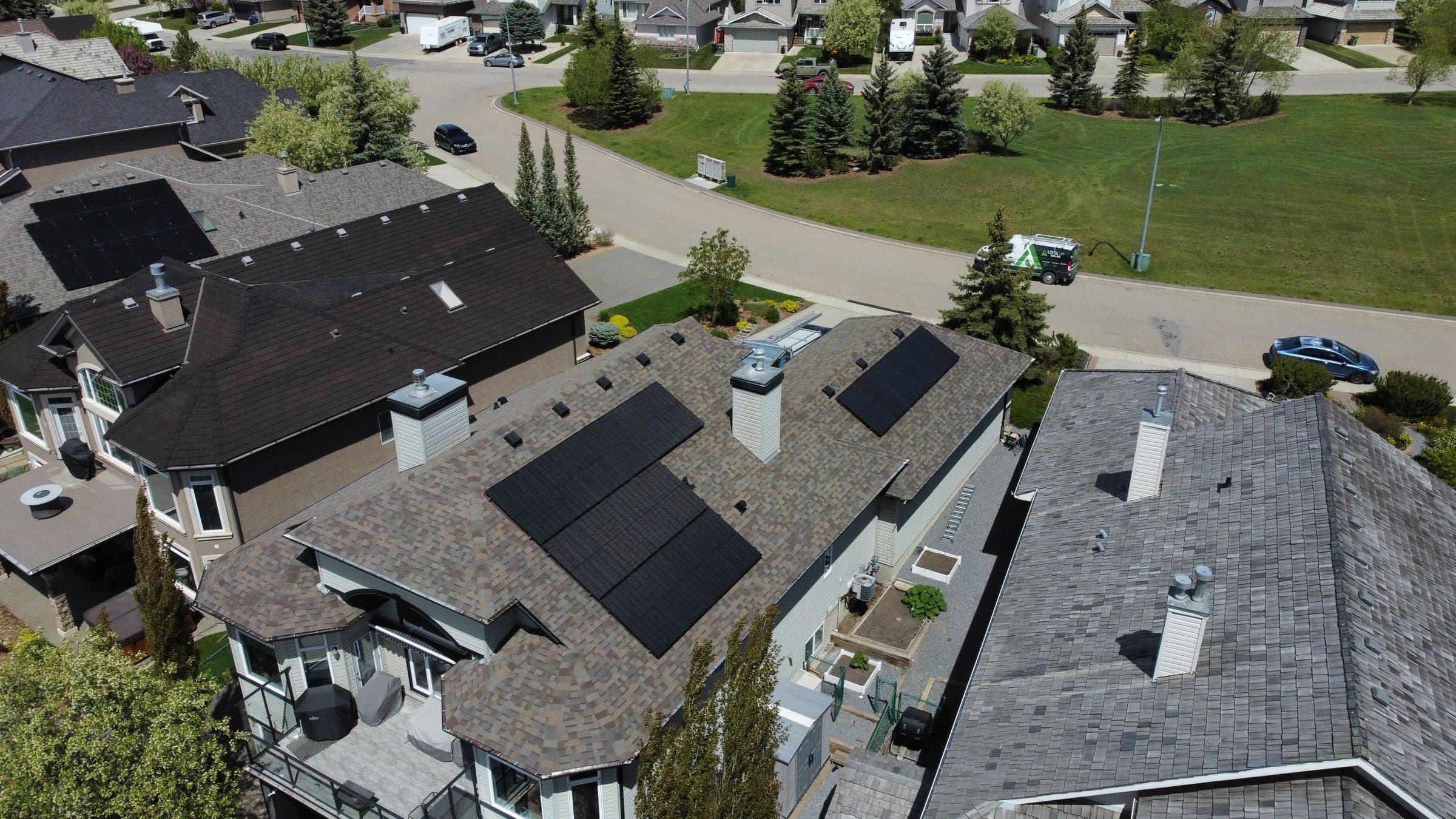
The cheapest kilowatt-hour you’ll ever put in a car is one the roof made at the same moment, because it avoids the delivery charges that make up a large part of every bill. If the car is home by day, charge by day. If it isn’t, overnight charging still runs on the credits the roof earned. Either way, an EV is a new load, and your utility lets the solar system be sized larger to cover it. Tell us about the car when we design the system.
Common questions about EV chargers
- What's the difference between Level 1 and Level 2?
- Level 1 is the cord that came with the car, plugged into a normal outlet: about 6 to 8 km of range per hour, which is fine for a short commute and hopeless for anything else. Level 2 is a 240 volt charger on its own circuit, like a dryer: 30 to 50 km of range per hour, a full charge overnight. Level 2 is what people mean by a home charger.
- Will my panel handle a charger?
- A Level 2 charger needs a dedicated 240 volt circuit, typically 40 to 60 amps. Plenty of 200 amp panels take it without trouble. A 100 amp panel that's already running a house usually can't, and the answer is a panel upgrade or a load-managed charger that throttles when the house is busy. We check and tell you which.
- Which charger should I buy?
- Any well-made, certified Level 2 unit works with any EV sold in Canada; the plug is standard. We'll recommend one that fits your panel and budget, or install the one you've already bought if it's certified for Canada.
- Can I charge on solar?
- Yes, and it's the cheapest way to fill a car. Power your roof makes and your car uses in the same moment avoids the whole delivered price of electricity. If you can charge by day, do; if you can't, charge overnight on the credits the roof earned. Either way, your utility lets the solar be sized larger to cover the car.
- Do I need a permit?
- Yes, an electrical permit, and the work has to be inspected. We pull it, do the work, and book the inspection. An uninspected charger is a problem for your insurance and for the next owner of the house.
Adding a charger, a heat pump and solar together? Start with the panel.
Get a charger quote
Tell us the car, where it parks, and whether you have a photo of your electrical panel. That's usually enough for a fixed price.
Get a free quoteOr call 587-000-0000