
Our process
From a quote to power on
Six steps, one person running them, and no surprises on install day. Here's what happens, in order, and what we check so the price doesn't move.
Get a free quoteThe six steps
01
Tell us about the house
The address and roughly what you spend on power. We look at the roof on satellite before anyone calls you.
02
The plan
A design sized to twelve months of your bills, with a fixed price and the year it pays for itself. If the numbers don't work for your house, we say so.
03
Permits and the utility
We file the electrical permit, any development permit your municipality wants, and the microgeneration application with your utility.
04
Installation
One to two days on the roof for most homes. Roofers and electricians on the same crew, so the penetrations are done the way a roofer does them.
05
Inspection
We book it, meet the inspector, and leave the site tidy.
06
Power on
We switch the system on, put the monitoring app on your phone, and walk you through what your bill will look like from here.
Before the plan: the satellite look
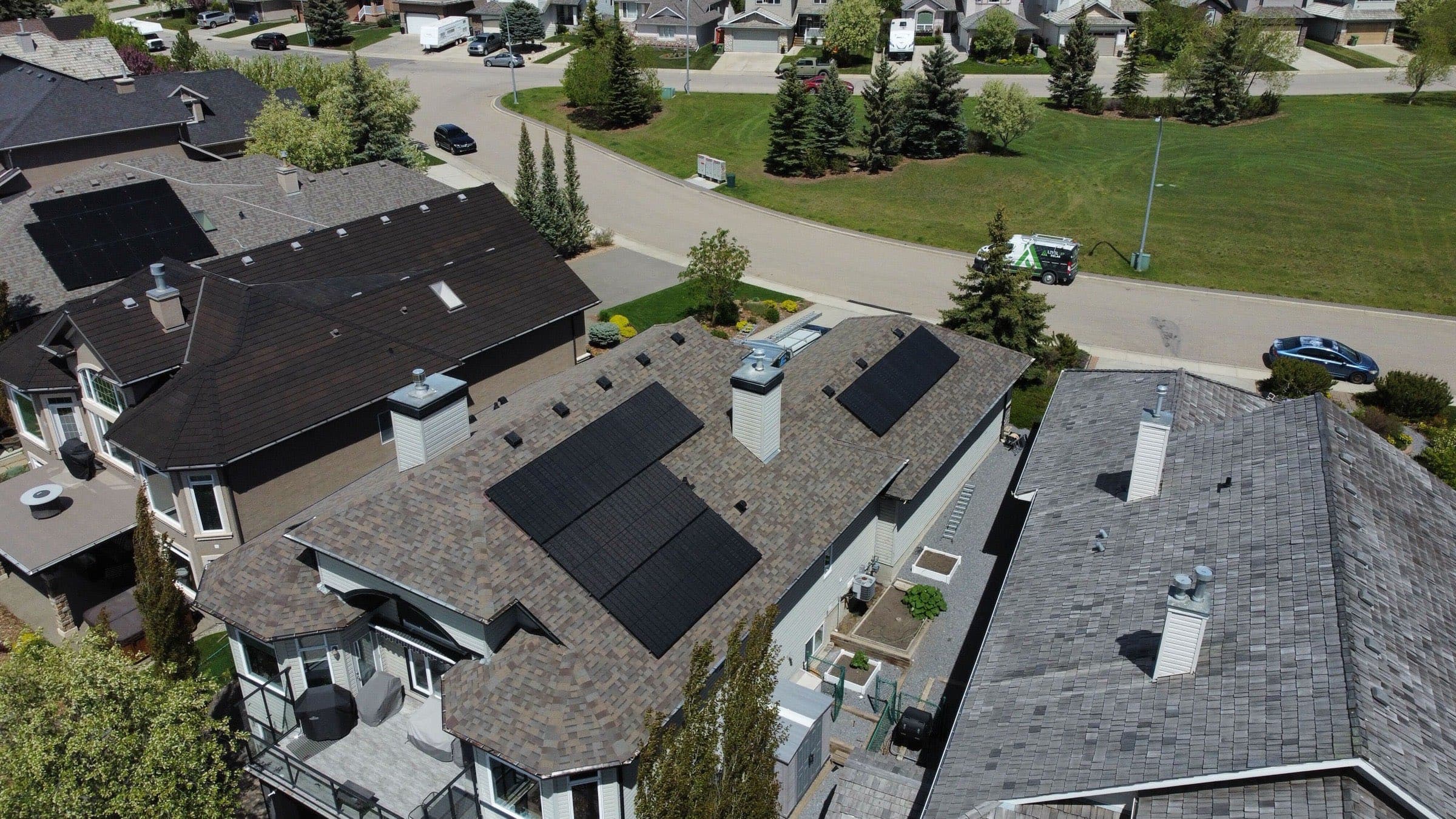
The first thing we do with an address is look at the roof from above. Orientation, pitch, shading from trees and neighbours, how many panels fit and where. Most of the design happens here, before anyone calls you, which is why the first conversation is about your numbers and not about whether solar is possible.
The plan is a fixed price, not an estimate
You get a design sized to twelve months of your bills, with the production month by month, a fixed price, the payback year, and the financing options you qualify for. If the numbers don’t work for your house, the plan says so and we part as friends. The proposal and the contract come together, so there is nothing to read later that you didn’t see up front.
The site visit
Before or just after you say yes, someone comes to the house. Not to sell you anything; the plan is done. The visit is to make sure the install goes the way the plan says and the price stays where it is. We check:
Getting on the roof
Where the panels get lifted from, where the truck parks, and how the crew moves around the array safely.
Getting the wire inside
Whether there's an attic to run the conduit through, or whether it runs down the outside. We agree the route with you before anyone drills.
The electrical panel
Its rating, how full it is, and whether it can take the solar. If it's in a finished basement we talk about the access panel now, not on install day.
Anything that changes the price
Taller ladders, a tricky roof pitch, a service upgrade. If it's going to be on the invoice, it's in the plan first.
Permits and the utility
We file the electrical permit, any development permit your municipality wants, and the microgeneration application with your utility. The utility approval is the slow part and the one that sets the overall timeline. You don’t fill in anything.
Install day
One to two days on the roof for most homes. Roofers and electricians on the same crew: the racking goes into rafters or trusses, every penetration is flashed and sealed the way a roofer does it, the microinverters and panels go on, and the electrician ties it into the panel. We leave the site tidy and the system ready for inspection.
Inspection and power on
We book the inspection, meet the inspector, and fix anything asked for at our cost. Once it passes, the utility switches the system on. We put the monitoring app on your phone, show you what each panel is doing, and walk you through what the first few bills will look like, because they take a few months to settle.
Common questions
- How long does the whole thing take?
- The install itself is one to two days for most homes. Permitting and utility approval put the full timeline at roughly four to eight weeks from signing. We handle the permits and the microgeneration application; you don't deal with the city or the utility.
- Do I have to be home for the install?
- For the start of day one, yes, so we can confirm the plan and get at the panel. After that the crew works outside and in the attic or mechanical room. You'll want to be around when it's switched on so we can put the app on your phone and walk you through it.
- Who do I talk to if I have a question?
- The same person from the first call to the inspection. No call centre, no handoff to a project desk. If something needs attention in year seven, it's the people who put it up who come back.
- What if the inspection fails?
- It's rare, because we design inside the utility's rules and the electrical code from the start. If an inspector asks for a change, we make it and rebook at our cost. The system isn't finished until it passes.
Want to understand what happens after power on? How solar works covers the meter, the credits and the first bills.
Find out what your roof is worth
Tell us the address and we'll look at it on satellite before we call. No sales visit unless you want one.
Get a free quoteOr call 587-000-0000